I’ve been thinking about Death of the Author lately.
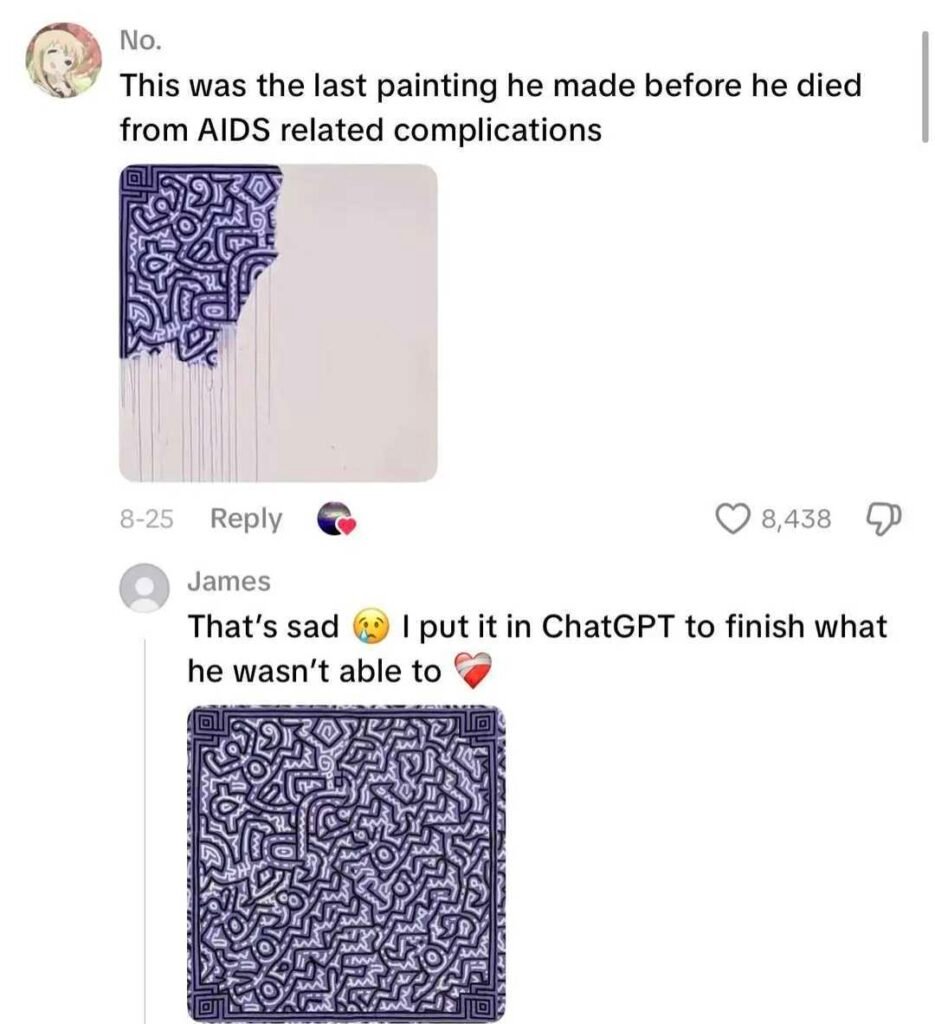
Roland Barthes coined the term Death of the Author in his essay on literary criticism. He didn’t like the focus on the author’s personal context and argued that meaning is created by the interpretation of the reader. Once art is created it has to stand on its own. I can see some merit to the theory, something always feels a little off about art that requires too much explanation, but I can’t agree with Barthes all the way. Tears in Heaven hits different because we know about Clapton’s child. Vivaldi’s Primavera captures the imagination in a particular way because of the title. And the “unfinished” piece above is perfect exactly as it is. It’s ok for an artwork to require context.
To me the whole argument is a false dichotomy; meaning isn’t created only by the author or by the reader. Instead, art is a conversation, and like any conversation there’s what they said and there’s what you heard. It’s the same problem I always had with that old quip “offense isn’t given, it’s taken”. It’s both. I should try to choose my words carefully and you should try to interpret me charitably, we share responsibility for the conversation.
Which brings me to why art with no author is meaningless.
Art as conversation requires separate, unique human perspectives to have any significance. When Brandon Sanderson finished Robert Jordan’s epic fantasy series The Wheel of Time, he made a point of acknowledging that the switch meant the series would be finished in his own voice.
I have not tried to imitate Mr. Jordan’s style. Instead, I’ve adapted my style to be appropriate to The Wheel of Time. My main goal was to stay true to the souls of the characters. The plot is, in large part, Robert Jordan’s, though many of the words are mine. Imagine this book as the product of a new director working on some of the scenes of a movie while retaining the same actors and script.
It’s generally accepted that Sanderson did a great job, but subjectively as a reader I can confirm that the tone shift was jarring! Sanderson did a good job not because he tried to make it perfect but because he understood the responsibility of adding his voice to an existing conversation. Viewer generated content would lack that delicacy. It would try to imitate, which is the easiest way to destroy art. Think of any sequel that was made without anything fundamentally new to say, it just tries to keep the high from the first one going and it feels hollow and sad.
An artist isn’t a person who can get an idea from their head onto a piece of paper. An artist is a person with a unique perspective to share and a need to share it. That need drives the years of work it takes to develop your unique artistic voice and hone the skill to paint or write or animate your vision knowing it will never be perfect.
It will never be perfect because it isn’t meant to be. The only things that can be communicated perfectly are concrete things and art deals with the abstract and intangible.
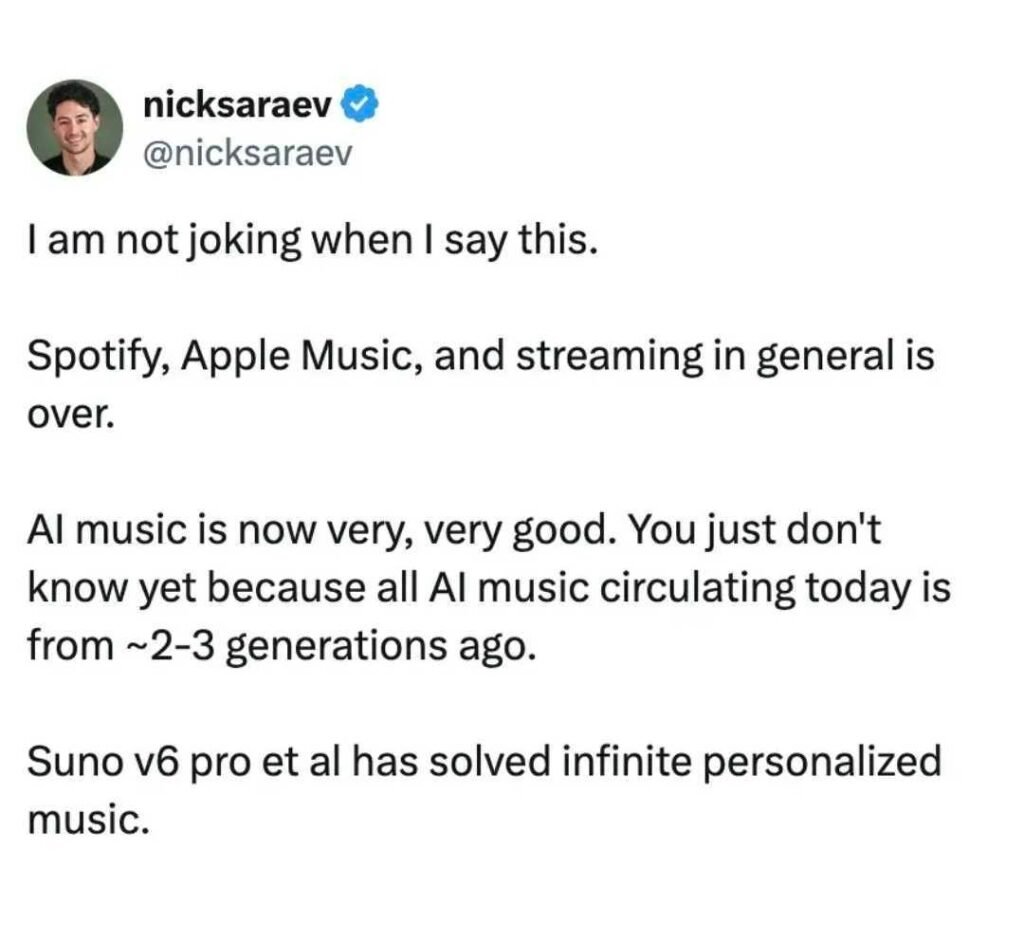
I keep hearing this idea about generating custom, personalized content, and I can hardly articulate how ardently I hope this never takes off. Art isn’t meant to be optimized to me, the consumer. It’s meant to be some other person’s desperate, flawed attempt to communicate a human experience across the impassable chasm between our psyches. It doesn’t have to be an especially deep experience they’re sharing, but it has to be a communication or it’s empty.
We’re always looking for music and movies that we like more, that speak more to our personal experience and show us something we relate to and appreciate. So I can understand the surface appeal of custom content that imitates that voice you’re searching for, but what’s really the point? This is the trap that AI lures us into – it makes us feel heard and seen and understood by regurgitating our own selves back to us. But you’re not looking for art that suits your tastes for its own sake, you’re looking for it because it means somebody else in this world shares those thoughts and values. Media creates shared cultural experiences that foster asynchronous connection. What is it without that? If we could build a machine that trained on my entire life history and scanned my brainwaves and fed me only the sounds I most want to hear and only the visions I most want to see in the whole world, I’d rather listen to a human trying imperfectly to tell me something I’ll never understand.